


The Problem With Paper
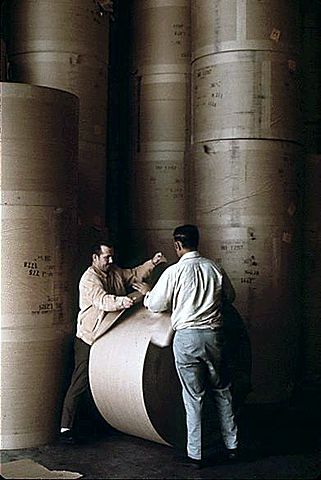 Newspaper printing has undergone a remarkable evolution over the years, driven by innovation and a relentless pursuit of efficiency. However, this progress has often been tempered by practical constraints and unforeseen trade-offs. Each technological leap forward, from the introduction of steam-powered presses to the widespread adoption of wood pulp paper, has brought both new possibilities and new challenges. While these advancements have democratized access to news and accelerated production, they have also introduced issues like fragility and the rapid degradation of materials, creating obstacles for research.
Early newspapers, crafted on durable rag paper made from cotton and linen fibers, were designed to last, and many have endured the test of time remarkably well. However, the rapid advancements in printing technology during the late 19th century and the surging demand for mass production brought a pivotal shift: the widespread use of cheaper, wood pulp-based paper. While this change allowed publishers to print newspapers at unprecedented speed and scale, it introduced significant preservation challenges. The fragile nature of wood pulp paper, prone to yellowing, brittleness, and decay, has left many historical newspapers in precarious condition.
This shift in material highlights a stark reality—innovations meant to democratize access to news inadvertently created obstacles for future generations. Today, understanding the implications of this transition is vital not only for researchers and archivists but also for educators and historians who rely on these records. The fragility of these papers underscores the importance of digitization efforts, which serve as a lifeline for preserving the rich stories and cultural insights contained within these ephemeral pages. Without proactive efforts to safeguard these resources, countless chapters of history risk being lost to the passage of time.
Rag Paper: The Durable Medium of Early Printing
 Before the mid-19th century, newspapers and documents were crafted on “rag” paper, a durable material made from cotton and linen fibers. Produced by pulping rags with simple tools like mortar and pestle, this paper had a neutral pH, which made it naturally resistant to degradation. Its stability allowed it to remain intact for centuries, offering a level of preservation that modern paper struggles to match.
For early publishers and archivists, the resilience of rag paper was invaluable, and many examples from the 17th and 18th centuries survive today in exceptional condition. This longevity is why cotton-based paper is still used for applications requiring permanence, such as currency and archival materials.
However, by the mid-19th century, the slow, labor-intensive process of making rag paper couldn’t keep up with the growing demand for affordable, mass-produced newspapers. The situation worsened during wartime, particularly during World War I, when rags were diverted to support military needs, such as producing bandages and uniforms. This shortage, combined with the increasing availability of wood pulp, led publishers to adopt wood pulp paper—a material that transformed the industry but introduced significant preservation challenges.
While wood pulp paper enabled the mass production of news at unprecedented speeds, its acidic nature and tendency to degrade over time starkly contrast the durability of rag paper, leaving many modern researchers grappling with the fragility of these once-revolutionary innovations.
The Shift to Wood Pulp and Its Consequences
 By the late 19th century, the rapid expansion of newspaper circulation demanded a paper production method that could keep pace with the growing appetite for news. Publishers sought an economical and readily available alternative to traditional rag paper, leading to the widespread adoption of wood-pulp-based paper. While this innovation addressed the immediate need for affordability and scalability, it came with unintended consequences that continue to impact preservation efforts today.
Wood pulp introduced two primary issues: acidity and lignin content.
- • Acidity and the Role of Alum: Early wood pulp paper contained alum, a type of aluminum sulfate used in sizing to make paper ink-resistant. However, alum is highly acidic, and over time, the acid breaks down the cellulose fibers in the paper, causing it to weaken and become brittle. Variations in the amount of alum added to different batches further exacerbated inconsistencies in paper quality. By the 1930s, research revealed the devastating effects of acid paper. William Barrow’s landmark studies demonstrated that many wood-pulp-based papers from 1900 to 1949 had lost 96% of their original strength within 40 years.
- • Lignin and Yellowing: Another major issue with wood pulp paper is its lignin content. Lignin, a natural polymer in wood, reacts with light and oxygen, causing paper to yellow and become brittle over time. This characteristic is why old newspapers are often yellowed and fragile. Publishers of the era were not concerned with longevity; they saw newspapers as disposable items, meant to be read and discarded within a day or two.
Although the shift to wood pulp revolutionized the publishing industry by making newspapers more accessible to the masses, it also transformed them into inherently disposable items. Publishers of the era didn’t foresee the need to preserve their newspapers for posterity; the focus was on delivering information quickly and affordably. This short-term perspective left future generations grappling with the challenge of digitizing and preserving fragile, degraded pages—an effort made even more complex by the sheer volume of material produced during the heyday of wood-pulp paper.
Newsprint: The Rise of Disposable Media
 The skyrocketing demand for affordable paper in the late 19th century led to the development of newsprint, a machine-produced, cost-effective paper made primarily from wood pulp. Newsprint became the backbone of the burgeoning newspaper industry due to its low cost and compatibility with high-speed printing presses. While this innovation enabled publishers to reach wider audiences with unprecedented efficiency, the material’s inherent fragility made it unsuitable for long-term preservation, leaving archivists today with the challenge of safeguarding deteriorating historical records.
Newsprint was never intended to last—it was a disposable medium designed for immediate use and quick dissemination of information. Publishers prioritized function over durability, creating newspapers meant to be read and discarded. Despite its ephemeral nature, the affordability of newsprint allowed for experimentation in design. Cleaner layouts with increased white space and improved readability became more common, making newspapers more visually appealing to readers of the time. Interestingly, these design choices benefit modern digitization efforts. The clearer layouts, despite the poor physical condition of the paper, often result in better accuracy for Optical Character Recognition (OCR) systems, which rely on well-defined text and spacing for optimal results.
While newsprint revolutionized how information was shared, it also contributed to the perception of newspapers as fleeting records of daily life. Today, digitization efforts work to counteract the impermanence of newsprint, preserving the insights and stories that would otherwise crumble into history. By understanding both the strengths and limitations of newsprint, researchers and educators can better appreciate its role in shaping modern journalism and the challenges involved in preserving its legacy.
 The Acid Paper Crisis and Barrow’s Predictions

By the early 20th century, it became evident that wood-pulp-based paper was inherently unstable.
Barrow’s 1933 article on the “acid paper problem” highlighted the urgency of addressing the issue, predicting that most newspapers printed on wood pulp would last only 40–50 years. After that, the paper would begin to decay, leaving behind brittle, yellowed fragments.
Barrow’s solution was to reformat newspapers to microfilm before decay rendered them unreadable. Microfilm became a standard preservation method in the mid-20th century, but it introduced new variables into the equation.
How Paper Evolution Impacts Digitization and OCR
The transition from rag paper to wood pulp introduced significant challenges for digitization efforts. Poor-quality newsprint degrades over time, resulting in faded text, crumbling edges, and uneven surfaces that complicate scanning and OCR. However, advances in printing technology during the late 19th and early 20th centuries, such as improved layouts and white space, partially offset these issues by making text easier to isolate and recognize.
OCR Challenges with Newsprint
- • Yellowing and Fading: Deteriorated paper creates contrast issues, making it difficult for OCR software to distinguish text from the background.
- • Breaks in Text: Brittle paper often cracks or tears, leaving gaps that OCR misinterprets as missing characters.
- • Ink Bleed: Newsprint’s inconsistent absorption of ink can lead to smudging or blurry text, resulting in OCR errors.
While OCR technology continues to improve, the fragility of newsprint means that human intervention—such as manual transcription or targeted scanning adjustments—is often required to ensure accuracy.

The technological advancements of the late 19th and early 20th centuries revolutionized newspaper production, allowing for mass circulation and more accessible information. However, the shift to cheaper materials came at a cost, leaving archivists and researchers to grapple with the challenges of preserving fragile, acidic paper. By understanding the legacy of the materials and methods used in their creation, educators, researchers, and historians can better appreciate the delicate balance between innovation, preservation, and access—and ensure that yesterday’s stories are available for generations to come.

